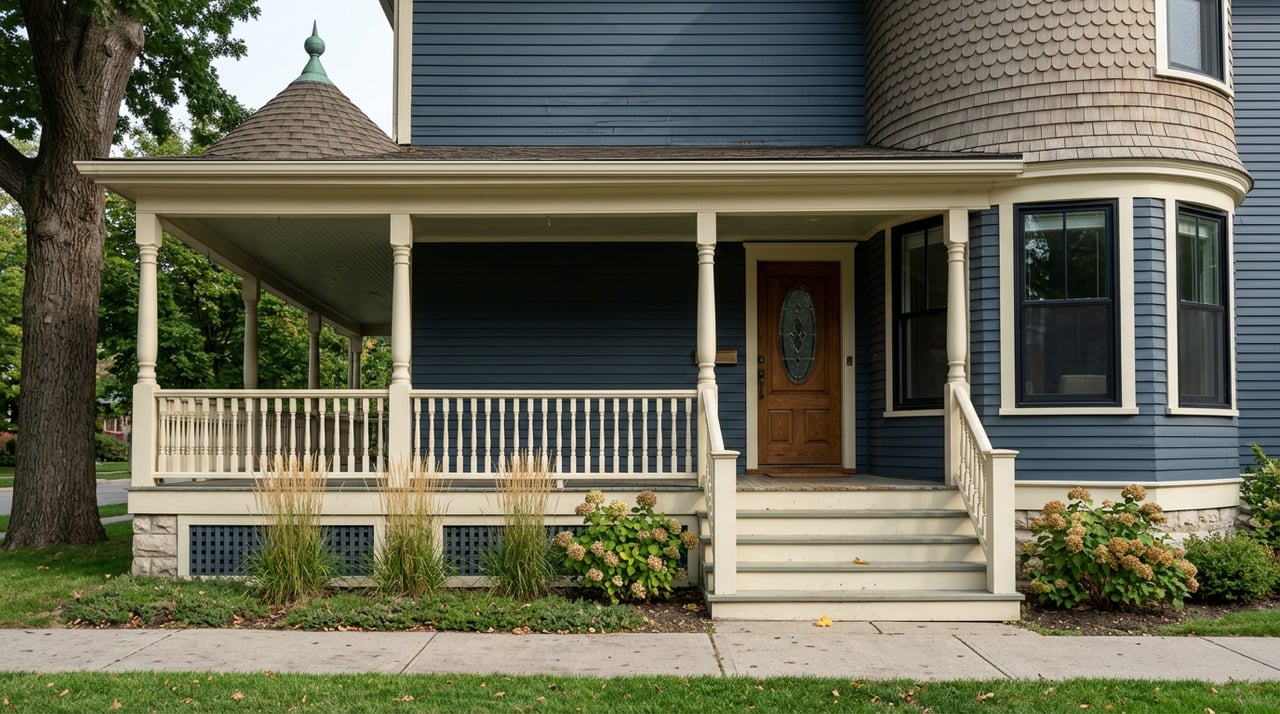
What to Know About Buying an Older Home in East Hill Prince Albert
July 16, 2026
July 16, 2026
Two listings on my screen this week, roughly the same asking price. One is a 1912 character home on the brow of the East Hill, three blocks from the Diefenbaker House. The other is a five-year-old two-storey out in Crescent Acres with a heated garage and a full warranty binder in the kitchen drawer. From the top of a portal search, they look like substitutes.
They are not substitutes. In Saskatchewan's current market, the sticker price on that East Hill home is doing a very specific job: it is pricing in a condition risk that the seller is legally allowed to hand you at possession, and that most first-time buyers do not see until the inspector opens the electrical panel. That gap is the real story of buying older in Prince Albert right now, and it is worth understanding before you write an offer.
The Saskatchewan residential benchmark price hit a record $381,100 in May 2026, up 1.8% from April and 3.8% year over year, with just 2.8 months of supply across the province, one of the tightest markets in the country according to the CREA-sourced monthly tracker. Prince Albert inventory has been running close to 50% below the ten-year average through the first half of 2026.
In a market that tight, older stock in mature neighbourhoods like East Hill does not sit. It gets priced against move-in-ready inventory in the newer suburbs, because that is the comparable set buyers are pulling up. What this means, practically, is that the price you see on an East Hill listing is not a discount for age. It is a market-clearing number in a seller's market. Any condition allowance you assumed was baked in is probably not there, and you are the one carrying the deferred-maintenance line item after possession.
Here is the piece most buyers coming from other provinces get wrong. The Property Condition Disclosure Statement, the SRA-developed form your realtor will ask the seller to complete, is not required in Saskatchewan. Sellers can decline to fill it out. They can also answer "Do Not Know" or skip whole sections, and they remain within their rights. The Public Legal Education Association of Saskatchewan is direct about this: a PCDS is not required for a sale, and the underlying rule the courts apply is caveat emptor.
The general rule in Saskatchewan property purchases is buyer beware. Sellers must disclose latent defects they personally know about, meaning defects a buyer could not see on a reasonable inspection. They are not required to disclose patent defects, the ones a careful walk-through would reveal.
That framing comes out of McMillan v. Green, 2005 SKQB 382. It matters on the East Hill because so much of what goes wrong with a 1912 home is patent the moment someone who knows what they are looking at steps into the basement. A hairline stair-step crack in a rubble foundation. A cast-iron stack with corrosion blooms at the joints. Cloth-wrapped wiring visible where the ceiling was cut for a light fixture. Once observable, those things are yours.
The Saskatchewan Realtors Association form also carries a line that catches people off guard: sellers are only obligated to disclose defects they are personally aware of on certain questions, and a "Do Not Know" answer closes the door on liability for that item. A long-term owner who has never opened the attic hatch genuinely does not know what is in the insulation. That is a lawful answer. It is also your problem after closing.
The East Hill's residential brow was built out largely during the 1912 Prince Albert boom, with steady infill through the 1940s and 1950s, and scattered rebuilds since. Local historian Fred Payton and the Prince Albert Historical Society have documented the trim work, wrap-around verandas, and turret details that draw buyers in. Those same period features come attached to systems that Prince Albert inspectors flag in a predictable pattern.
| Era of home | Common system flags | What to price in |
|---|---|---|
| Pre-1920 (turn-of-century originals) | Rubble or brick foundation, knob-and-tube remnants behind finished walls, cast-iron stack, galvanized supply lines, single-pane wood windows | Insurer may require full electrical replacement; foundation parging and drainage; plumbing re-pipe timing |
| 1920s–1940s | Cinder-block foundation, 60-amp service, cloth-jacketed wiring, oil-tank ghosts in the yard, coal-chute openings, asbestos-wrapped ductwork | Panel upgrade to 100/200A, decommissioned oil tank documentation, abatement quotes for known asbestos |
| 1950s–early 1960s infill | Poured foundation, aluminum branch wiring in some vintages, vermiculite attic insulation, original cast-iron drain, single-pane storms | Vermiculite testing for asbestos content, aluminum-wire remediation at outlets, sewer scope |
None of these are deal-killers. Many East Hill homes have already had the panel upgraded, the knob-and-tube pulled, and the stack replaced. The point is that you cannot tell from the listing photos, and the seller is not obligated to tell you if they answer "Do Not Know."
A standard inspection condition is the tool that gets you out of caveat emptor. It only works if you scope it properly for the age of the house. On an East Hill property, I recommend clients budget for the base inspection plus specific add-ons rather than the base alone:
Ask your inspector, before you book, whether they carry the equipment for the add-ons or subcontract them. On older Prince Albert stock, hiring one generalist and running two specialty passes tends to catch more than a single comprehensive walk-through.
The other lever most buyers underuse is the language of the inspection condition itself. A pure "satisfactory to the buyer in their sole discretion" clause gives you a clean walk-away but very little price leverage, because the seller reads it as binary. In a 2.8-months-of-supply market, if you walk, they relist and someone else offers.
The clause that tends to work better on East Hill purchases is one that names the condition period, requires written notice of unsatisfactory findings with a summary of the report attached, and allows the parties a defined number of days to renegotiate price or repairs before the condition fails. Your realtor and lawyer will draft the exact wording. What you are buying with that language is a structured conversation about the sewer scope result, not a hostage exchange.
Two other small drafting points worth raising with your realtor. First, ask that the PCDS, if the seller completes one, be incorporated into the offer by reference rather than delivered separately after acceptance. Saskatchewan case law has treated statements delivered post-acceptance differently than those baked into the contract. Second, if the seller declines to complete the PCDS at all, note that in your offer and price accordingly. You are entitled to draw your own inferences from that decision, and so is your lender's appraiser.
Does an East Hill character home appraise differently than a Crescent Acres new build at the same price? Appraisers use comparable sales, and mature-neighbourhood comps in Prince Albert have held up well through the 2025 to 2026 price run. The appraisal is usually not where you get surprised. Where you get surprised is on the insurance application, if the electrical or roof age triggers a surcharge or a required upgrade before binding.
Is the seller obligated to tell me about a past basement flood? If they personally know about it and it is a latent defect, meaning not visible on a reasonable inspection, yes. If the flood left visible staining on the joists that any careful buyer would see, that is a patent defect and the disclosure duty is weaker. This is where a lawyer, not a blog, is the right call before you sign.
Should I skip the PCDS request if the seller seems reluctant? No. Request it in every offer. If they decline, that itself is information, and it lets you adjust your inspection scope and your price. It also creates a paper record of what was and was not disclosed.
How do I know if the wiring has already been updated? Ask the seller for the electrical permit history and any ESA-equivalent inspection reports through the City of Prince Albert. Then verify at the panel during your inspection. A homeowner's word that "it was all done" is not the same as a closed permit.
If you are working through this trade-off on a specific East Hill listing, or comparing one against a newer build in Crescent Acres or Carlton Park, that is exactly the conversation I want to have with you before you write an offer. Brooke Wozniak — book a consultation and we will walk through the listing, the disclosure, and the inspection scope together, so you know what you are buying before the condition period starts running.
Stay up to date on the latest real estate trends.
Whether you’re searching for your dream home or selling a property, Brooke’s insight, negotiation skills, and dedication ensure a seamless experience.