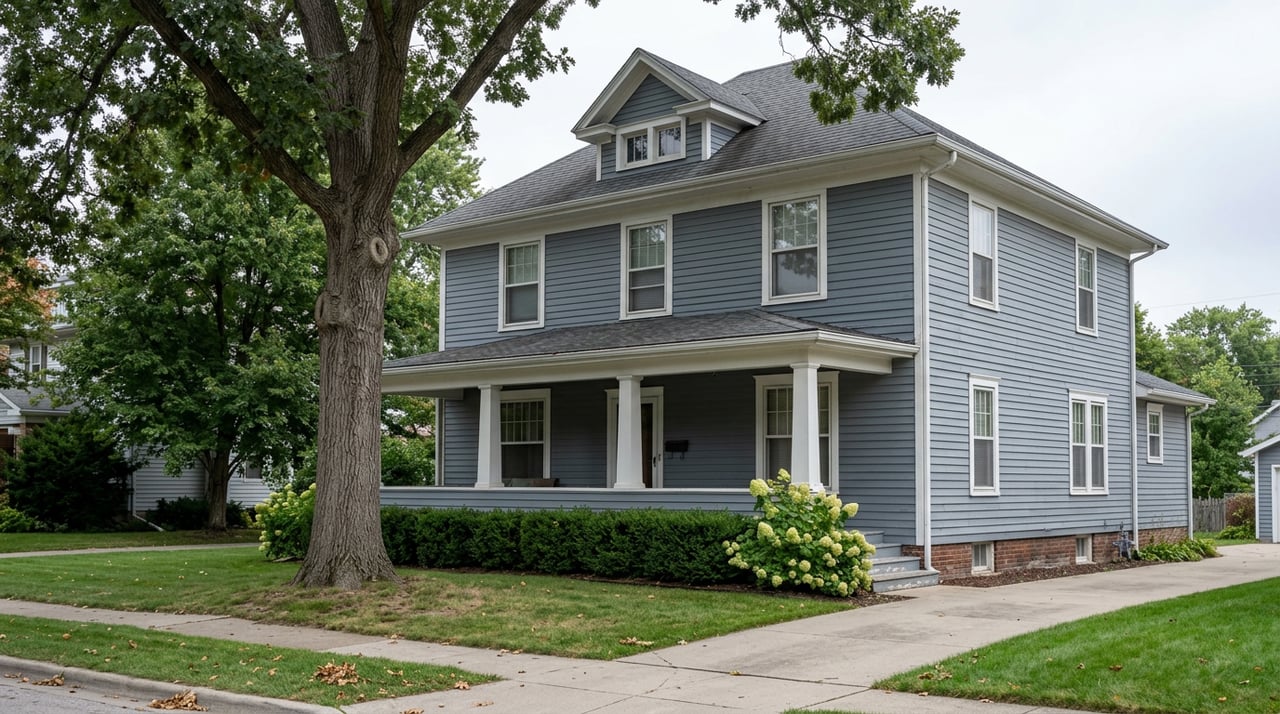
West Flat Prince Albert Home Prices: What They Reveal
September 17, 2026
September 17, 2026
Read enough Prince Albert neighbourhood market reports back to back and a pattern shows up that has nothing to do with West Flat itself. It shows up in the other neighbourhoods.
Midtown's report uses West Flat's condo price as a benchmark, presenting its own condos as priced higher. West Hill's report does the same thing, almost word for word. Nordale Hazeldell's report leans on West Flat's house price two months running to argue that its own homes are worth the premium. West Flat isn't bragging about anything in these write-ups. It's the number everyone else measures against.
That's not a coincidence of geography. It's a function of what West Flat actually is, and it tells you something about where the rest of the city's pricing is headed that a single-neighbourhood snapshot never would.
Neighbourhood-level market trackers like HonestDoor publish monthly reports for individual Prince Albert areas, pulling current sale activity rather than waiting on a city tax assessment cycle. What stands out across several months of these reports is how often West Flat's number gets borrowed to make a different neighbourhood's case.
| Report citing West Flat | Month | West Flat house price referenced | West Flat condo price referenced |
|---|---|---|---|
| Nordale Hazeldell | July 2026 | $172,588 | not cited |
| Nordale Hazeldell | August 2026 | $172,942 | not cited |
| Midtown | June 2026 | not cited | $161,525 |
| West Hill | June 2026 | not cited | $161,525 |
Midtown's June report specifically set its own condo pricing against West Flat's $161,525 figure to argue Midtown condos were "punching above their weight." West Hill's June report used the identical $161,525 figure to show its own condos sitting well above the West Flat floor. Nordale Hazeldell called West Flat "the most affordable of the nearby options" in July, then updated that same comparison in August with a slightly higher West Flat number.
Three different neighbourhoods, three different months, one shared reference point. That's not how a random sample of comparisons would behave. It's how a genuine price floor behaves.
The reason isn't mysterious once you look at what West Flat actually offers. It's one of Prince Albert's older, downtown-adjacent neighbourhoods, built out well before the phased development that shaped places like Crescent Acres or the newer construction pushing West Hill's premium. There's no recent-build inventory here driving prices up the way there is in neighbourhoods still adding phases.
What West Flat does have is proximity. It sits along the river trail corridor, within walking distance of the farmers' market and Kinsmen Park, a genuine downtown-adjacent lifestyle that doesn't show up in a price-per-square-foot comparison. That combination, older stock plus walkable position, is exactly the profile that gets used as a low-end anchor in market reports. The homes are real, well-located, and simply priced below newer or more recently renovated inventory elsewhere in the city.
That's worth sitting with for a second. Being the cheapest comparison point in someone else's report isn't the same as being the cheapest possible home. It means West Flat is doing a specific job in the local market's pricing logic, and that job depends on the gap between West Flat and everywhere else staying wide enough to be useful as a talking point.
Here's where the broader market context matters. Prince Albert's total residential benchmark price rose 2.6 percent year over year to just under $277,000 as of June 2026, according to the Saskatchewan REALTORS Association's monthly figures. At the same time, the city had only 104 homes on the market at the end of June, sitting 60 percent below the ten-year average and equal to just 2.3 months of supply. A balanced market usually runs four to six months of supply. Prince Albert isn't close to that.
Set West Flat's roughly $172,900 house price against that citywide benchmark of just under $277,000 and the gap is over $100,000. That's a real number, and it's the kind of gap that gets a neighbourhood cited repeatedly as the affordable option.
But a gap that size in a market with 2.3 months of supply is not a stable equilibrium. Tight supply pushes prices up everywhere eventually, including in the neighbourhood everyone else is using as their low-water mark. West Flat's August figure already ticked up slightly from July, a small move, but a move in the same direction as the rest of the city.
That's the piece a single neighbourhood snapshot misses. West Flat isn't frozen at a discount. It's the part of the market that hasn't caught up yet, in a city where the underlying supply pressure isn't going away.
If you're comparing West Flat with a pricier east-side option, the honest read is this. The discount is real, it's tied to the age of the housing stock rather than to anything wrong with the neighbourhood, and it's currently sitting inside a citywide market where months of supply are near record lows. That combination usually doesn't last indefinitely.
A few practical steps if West Flat is on your list:
None of this is a reason to rush. It's a reason to understand what you're actually buying when a home in West Flat is priced below the rest of the city. You're not buying a lesser product. You're buying into the neighbourhood every other report in this market uses to make its case.
Is West Flat priced lower because the homes need more work? Age is the main driver, not condition across the board. West Flat's housing stock predates the newer phases built out in neighbourhoods like Crescent Acres, and older stock without a recent-construction premium tends to price below newer inventory. Individual home condition still varies and should be assessed property by property.
How current is the pricing data behind this comparison? The figures here come from monthly neighbourhood reports covering June through August 2026, alongside Saskatchewan REALTORS Association data current through June 2026. Both are updated far more frequently than a municipal tax assessment, which is the point of citing them.
Should I wait to see if West Flat prices catch up before making an offer? Waiting has a cost in a market with 2.3 months of supply. If the pattern of West Flat being used as the citywide floor continues while supply stays this tight, the gap is more likely to narrow than to widen further.
Prince Albert's market right now rewards knowing exactly where a neighbourhood sits in the pricing conversation, not just what its listing price says. If you're weighing West Flat against another part of the city and want the current comparables laid out plainly, Brooke Wozniak can walk you through it. Book a consultation.
Stay up to date on the latest real estate trends.


Whether you’re searching for your dream home or selling a property, Brooke’s insight, negotiation skills, and dedication ensure a seamless experience.